
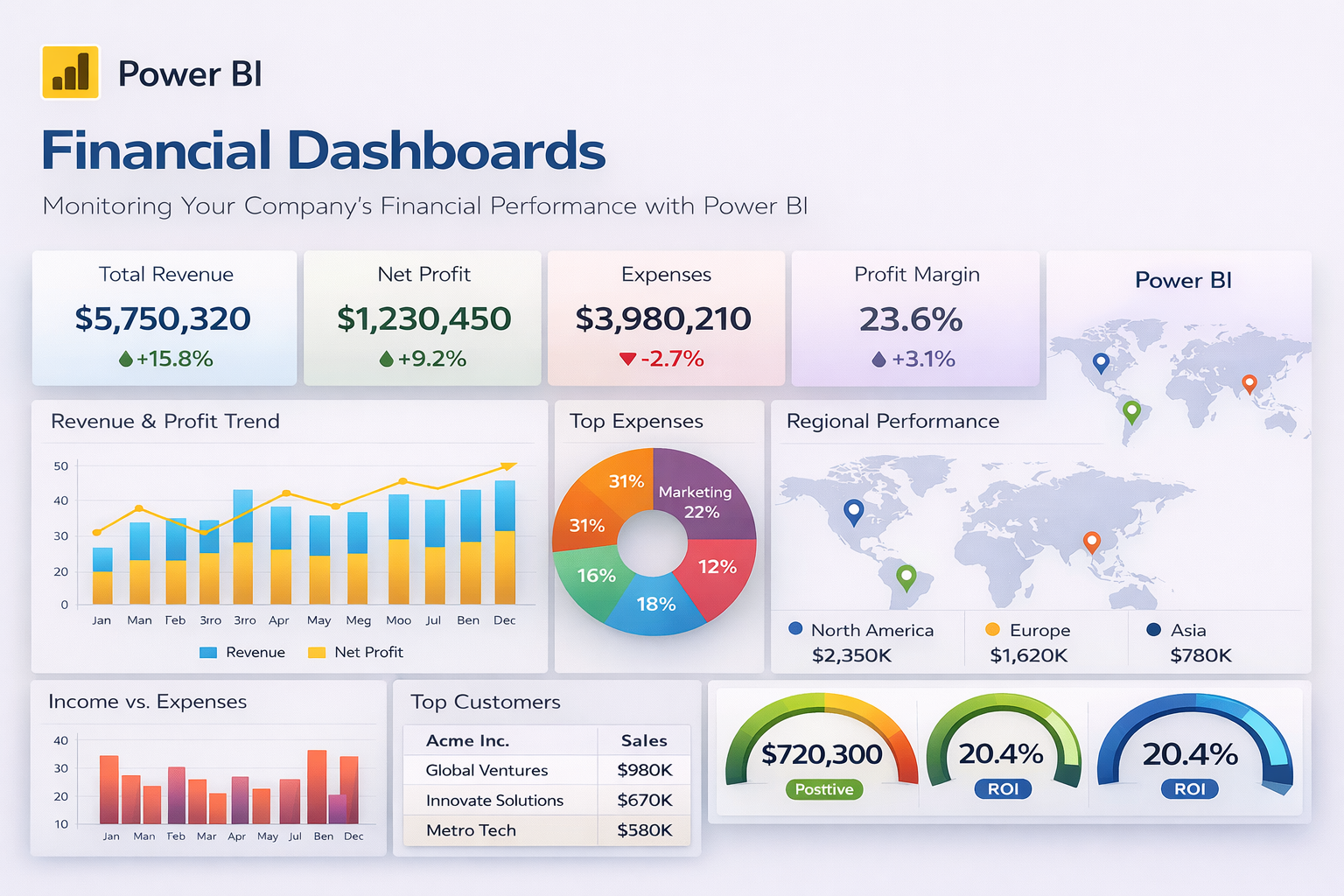
Finance Reporting with Power BI transforms raw financial data into clear, reliable, and decision-ready insights. By connecting ERP systems, Excel files, and planning data into a single model, Power BI delivers interactive P&L, balance sheet, and cash-flow reports with full drill-down capability. Automated refresh, consistent calculations, and role-based access ensure one trusted source of truth for all stakeholders—reducing manual effort, eliminating version conflicts, and enabling finance teams to focus on analysis, forecasting, and strategic decision-making rather than report preparation.
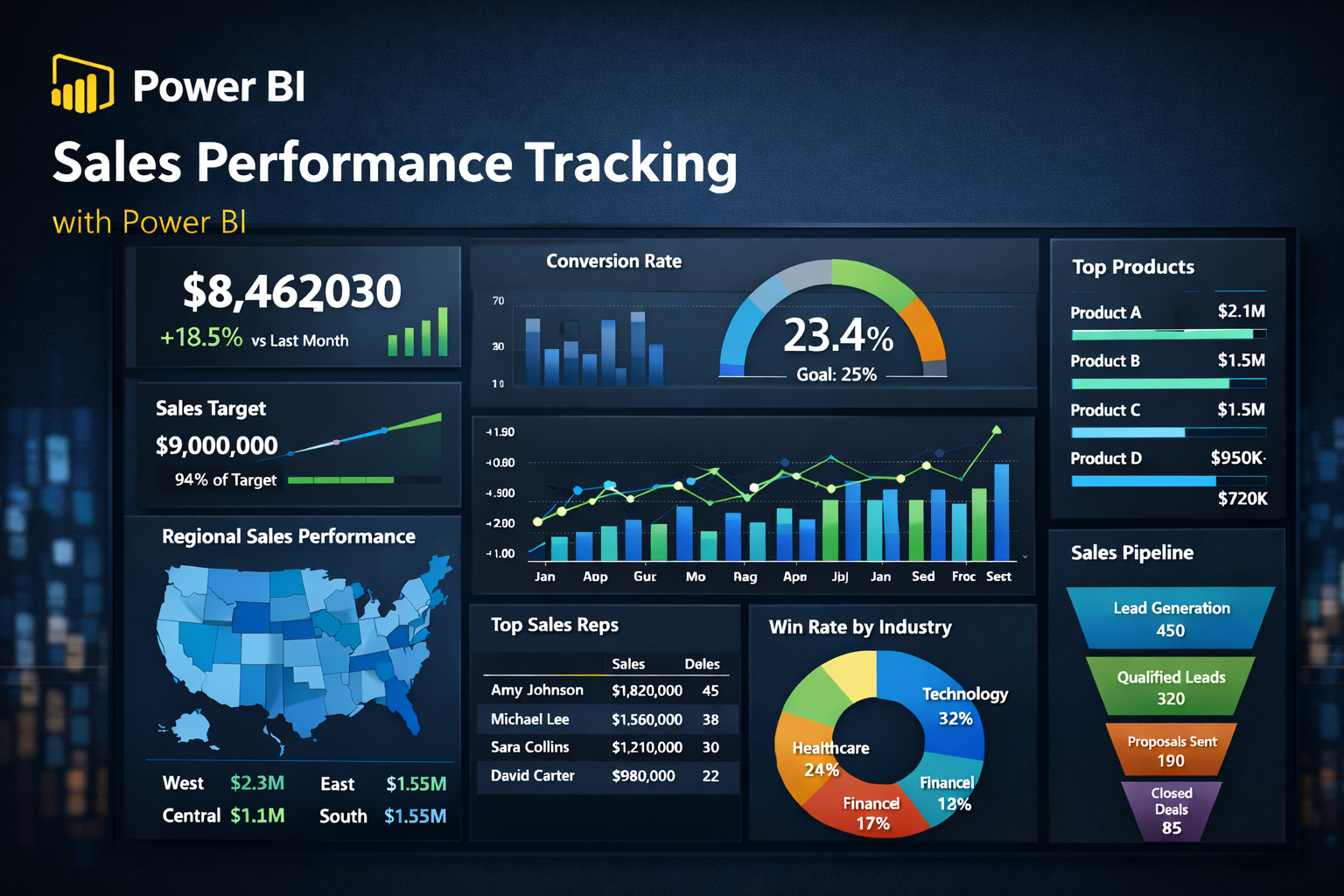
Sales Performance Tracking with Power BI provides a real-time, end-to-end view of sales activity across products, regions, and teams. By consolidating CRM, Excel, and ERP data into a single interactive dashboard, Power BI enables organizations to monitor revenue, targets, conversion rates, pipeline health, and individual sales performance in one place. With drill-down analytics, automated refresh, and role-based access, sales leaders can quickly identify trends, uncover bottlenecks, and make data-driven decisions that improve forecasting accuracy and drive consistent revenue growth.
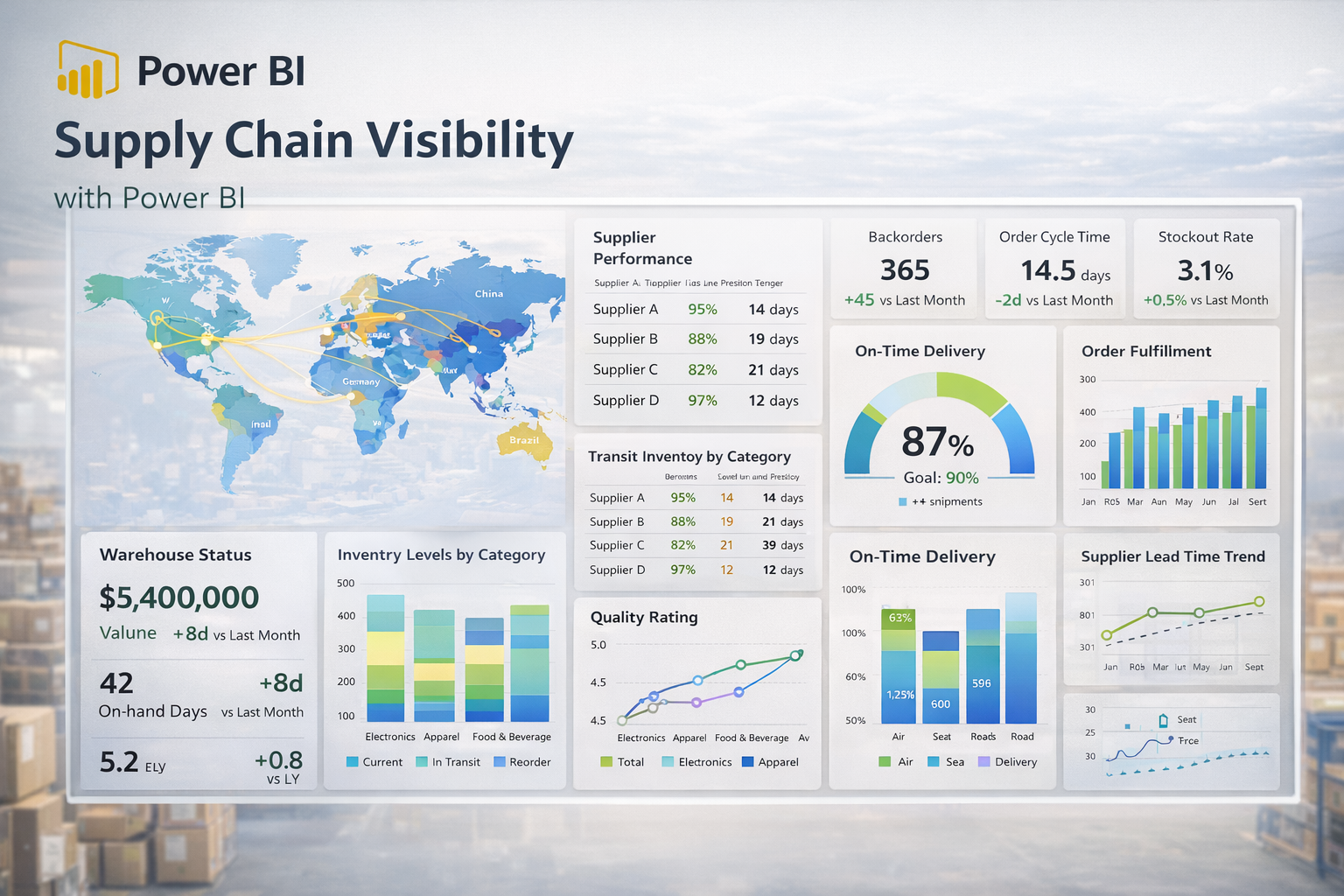
Supply Chain Visibility with Power BI enables organizations to monitor their end-to-end supply chain in real time, from suppliers and warehouses to in-transit shipments and customer delivery. By integrating data from ERP, logistics, inventory, and supplier systems, Power BI provides a unified view of inventory levels, lead times, on-time delivery performance, and potential risks. Interactive dashboards and drill-down analytics help teams quickly identify bottlenecks, anticipate disruptions, optimize stock levels, and make faster, data-driven decisions that improve resilience, efficiency, and customer satisfaction.
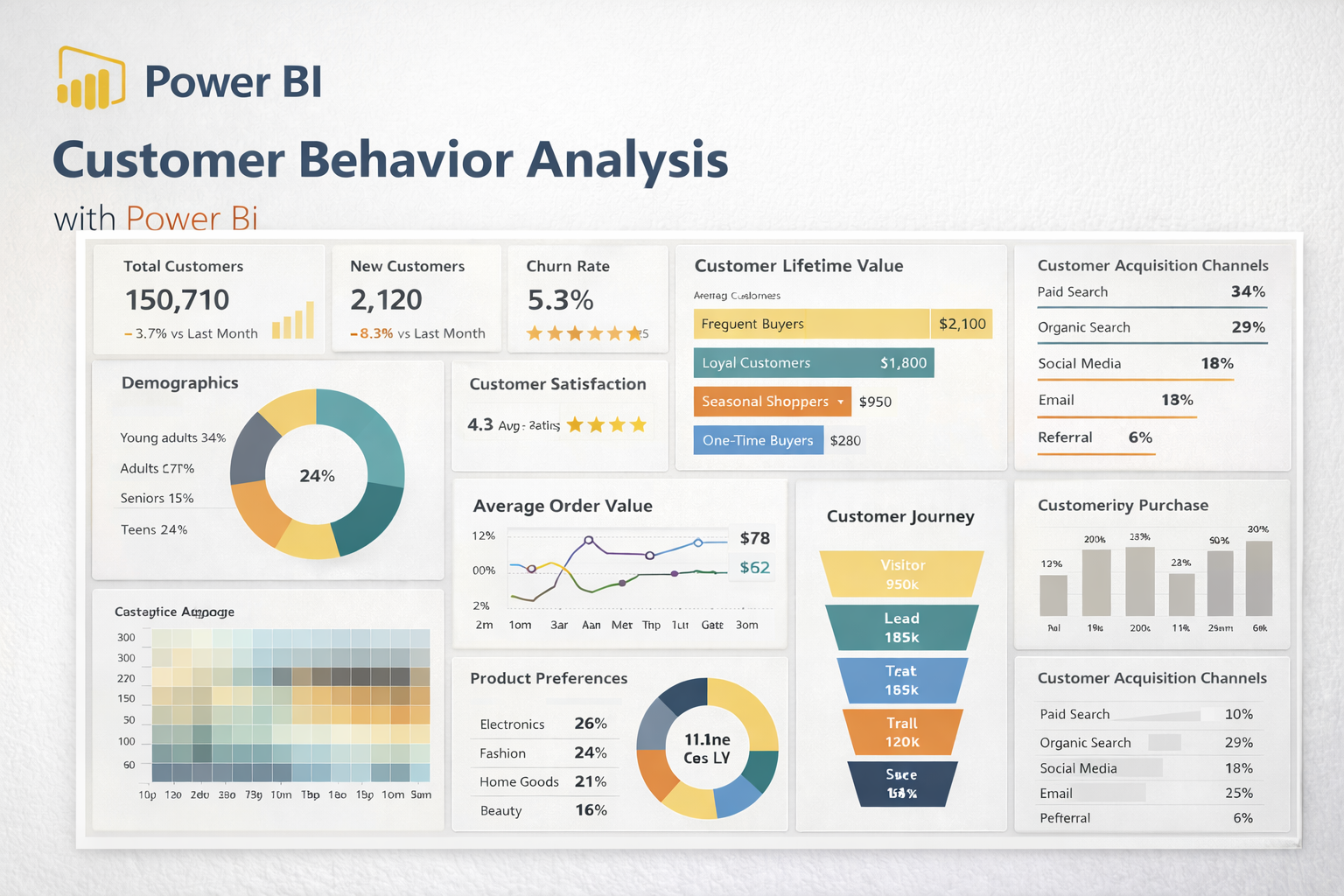
Customer Behavior Analysis with Power BI enables organizations to understand how customers interact, purchase, and engage across channels over time. By combining sales, marketing, and customer data into a single analytical model, Power BI reveals patterns in acquisition, retention, churn, purchasing frequency, and customer lifetime value. Interactive dashboards help teams segment customers, identify drivers of loyalty and attrition, and optimize marketing, pricing, and product strategies based on real behavioral insights rather than assumptions.
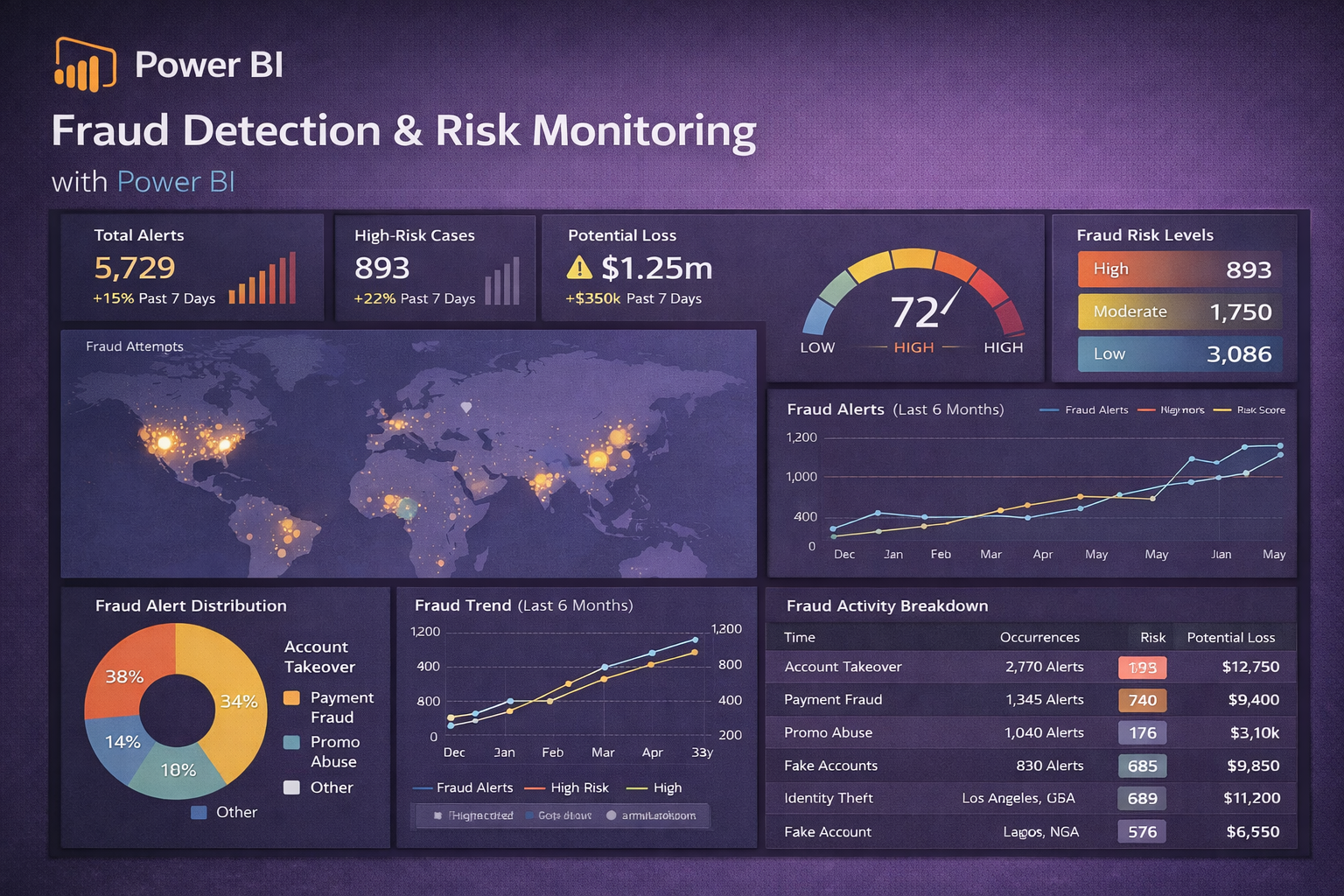
Fraud Detection & Risk Monitoring with Power BI enables organizations to identify, track, and respond to suspicious activity in near real time by consolidating transaction, customer, and operational data into a single analytical view. Interactive dashboards highlight high-risk patterns, anomaly trends, geographic hotspots, and potential financial exposure, allowing teams to prioritize alerts and investigate cases efficiently. With automated refresh, drill-down analysis, and role-based access, Power BI supports proactive risk management, faster decision-making, and stronger controls to reduce losses and improve compliance.
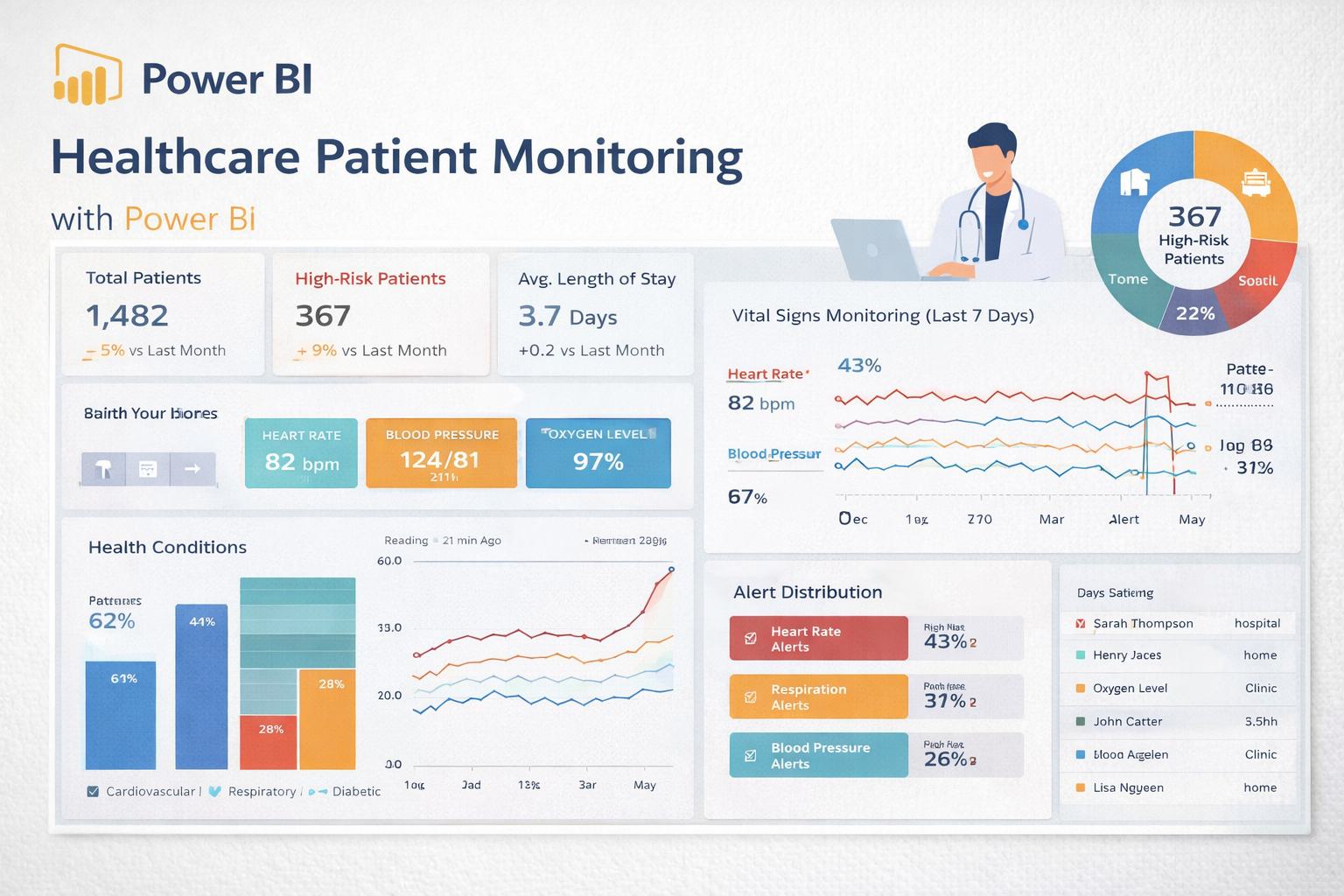
Healthcare Patient Monitoring with Power BI provides clinicians and healthcare administrators with a real-time, centralized view of patient health and operational performance. By integrating data from electronic health records, monitoring devices, and hospital systems, Power BI dashboards track vital signs, high-risk patients, alerts, length of stay, and care outcomes in one secure environment. Interactive visuals and timely alerts enable faster clinical decisions, early risk detection, and improved resource utilization—supporting better patient outcomes while maintaining efficiency and compliance across healthcare operations.
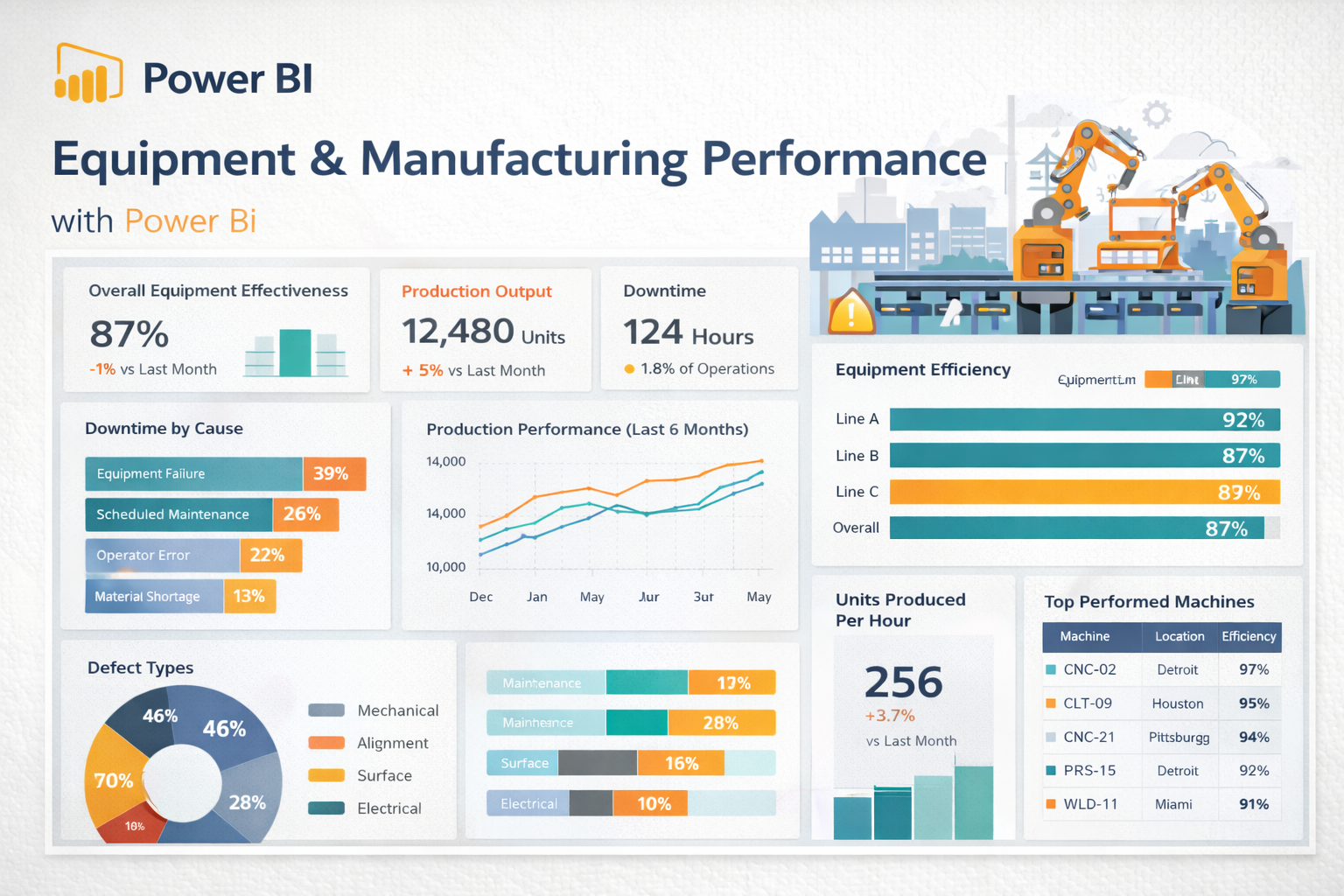
Equipment & Manufacturing Performance with Power BI provides manufacturers with a clear, real-time view of production efficiency, equipment health, and operational bottlenecks. By consolidating data from machines, sensors, MES, and maintenance systems, Power BI dashboards track key metrics such as OEE, output, downtime, defect rates, and maintenance drivers in one unified view. Interactive analytics help teams identify root causes of losses, optimize maintenance planning, improve throughput, and support data-driven decisions that increase productivity, reduce unplanned downtime, and enhance overall manufacturing performance.